Run the whole restaurant from one connected system.
FORNEBU connects your point of sale, kitchen, inventory, customers, workforce, scheduling, delivery channels and business controls — so the restaurant operates as one system instead of a collection of disconnected tools.
Built in restaurants. Designed for restaurant operators.
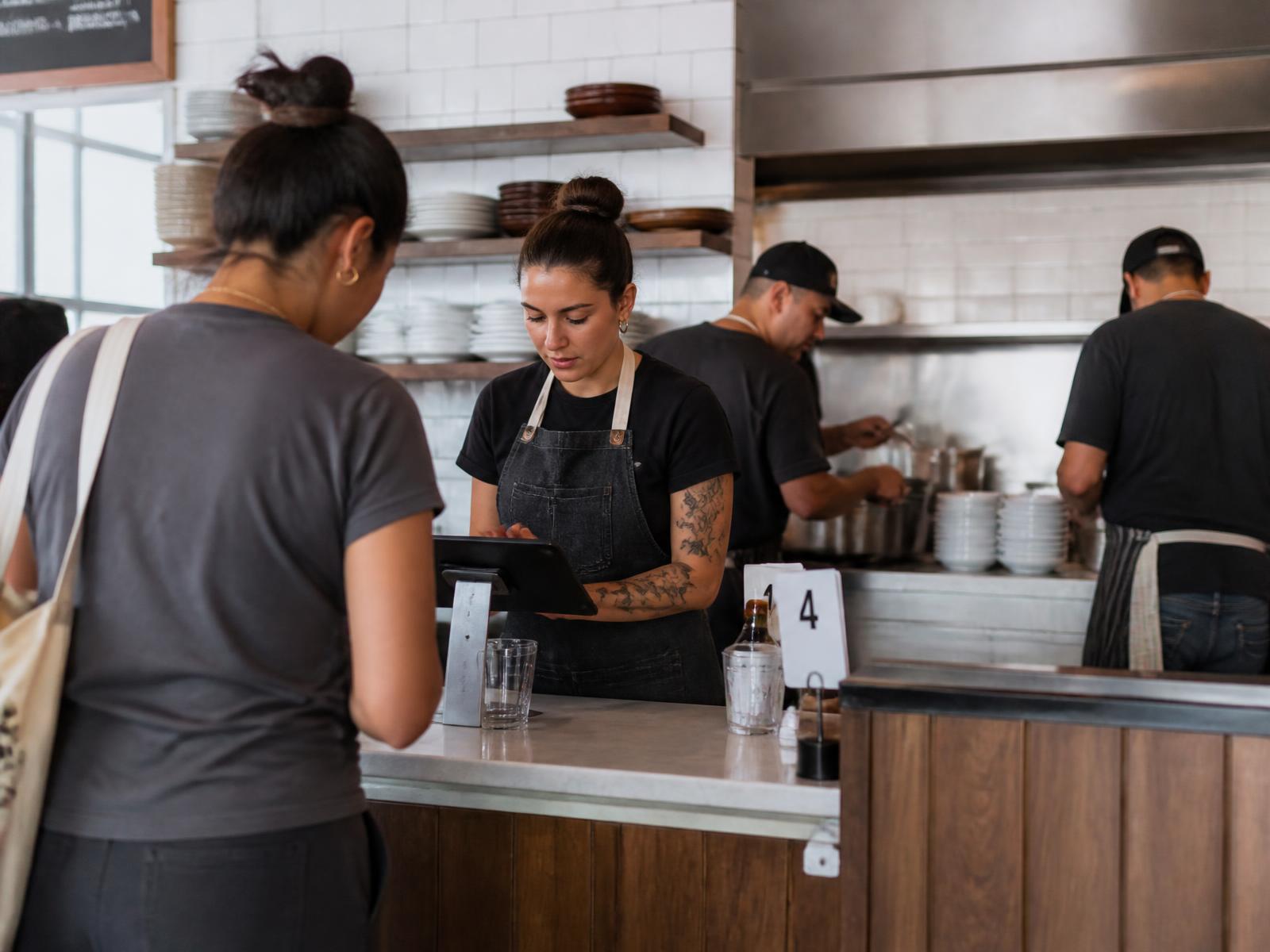
One operation
A restaurant is one operation. Its software should be too.
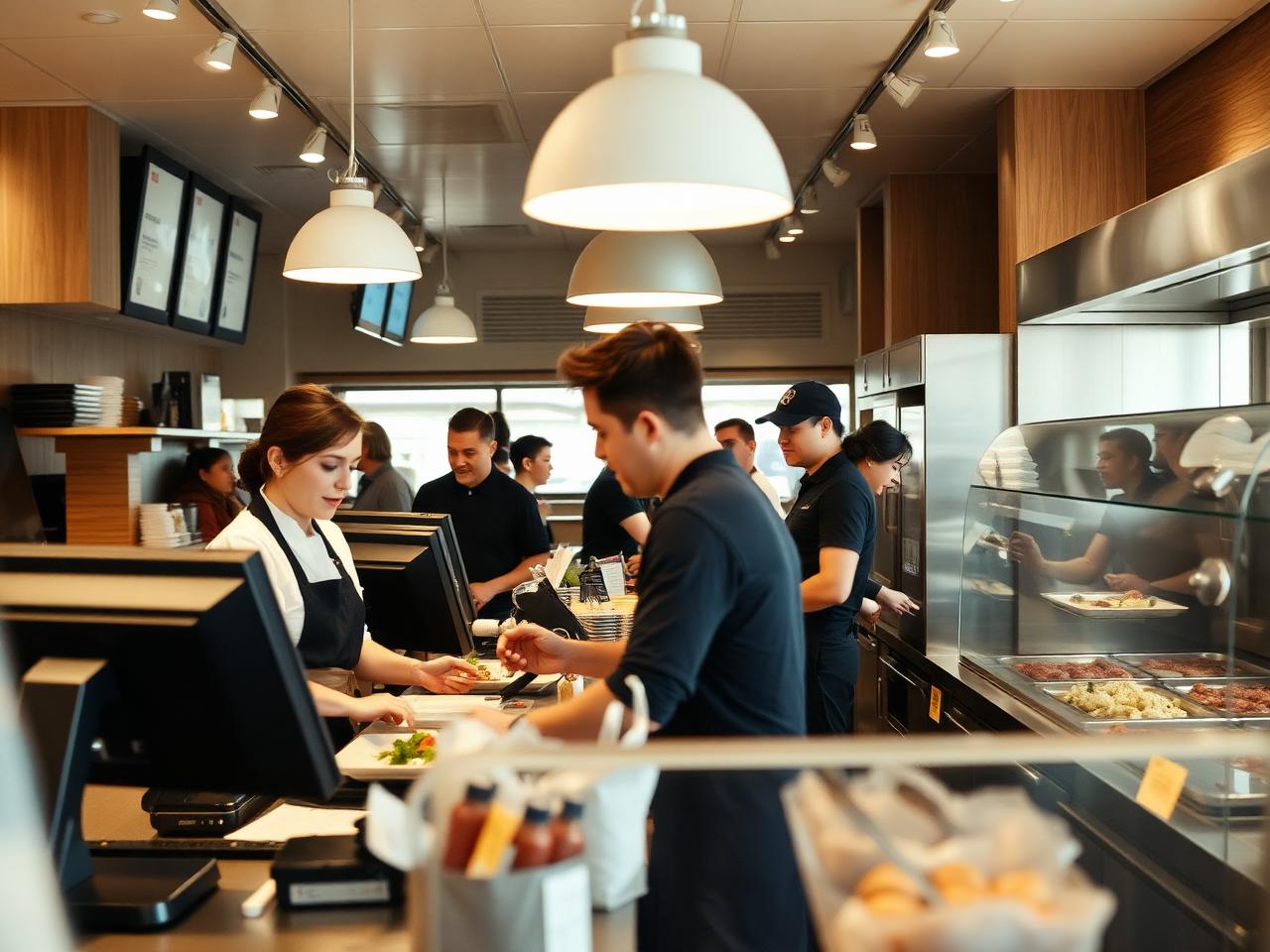
An order doesn't stop at the register. It moves through the kitchen, affects inventory, identifies customers, changes demand, creates labour requirements and becomes part of the business day. FORNEBU keeps those operating surfaces connected.
01
Sell
02
Serve
03
Stock
04
Grow
05
Team
06
Control
One action. One connected system.
Product ecosystem
Six operating pillars. One platform.
Everything a restaurant does in a day connects through six operating pillars — all working from one connected system.
Sell
Take the order, take the payment
Serve
Get it made, correctly
Stock
Know what you have and what you used
Grow
Turn transactions into relationships
Team
Run the people side of the restaurant
Control
Close the day, see the business
Product
One order. Connected across the restaurant.
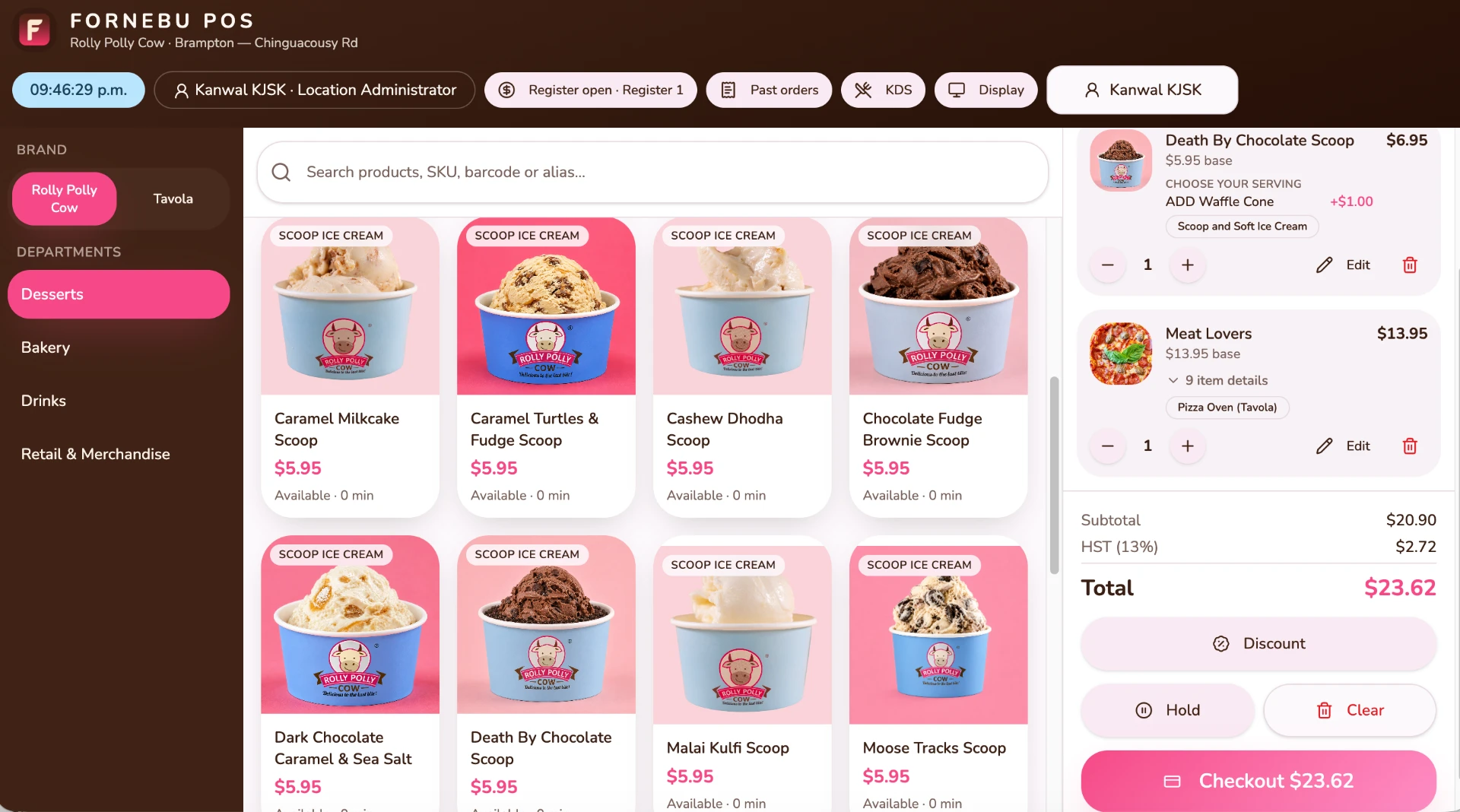
Real FORNEBU screens, in the order the restaurant day actually happens: the order is entered, the kitchen makes it, inventory moves, the customer relationship continues and the transaction becomes part of the operating picture.
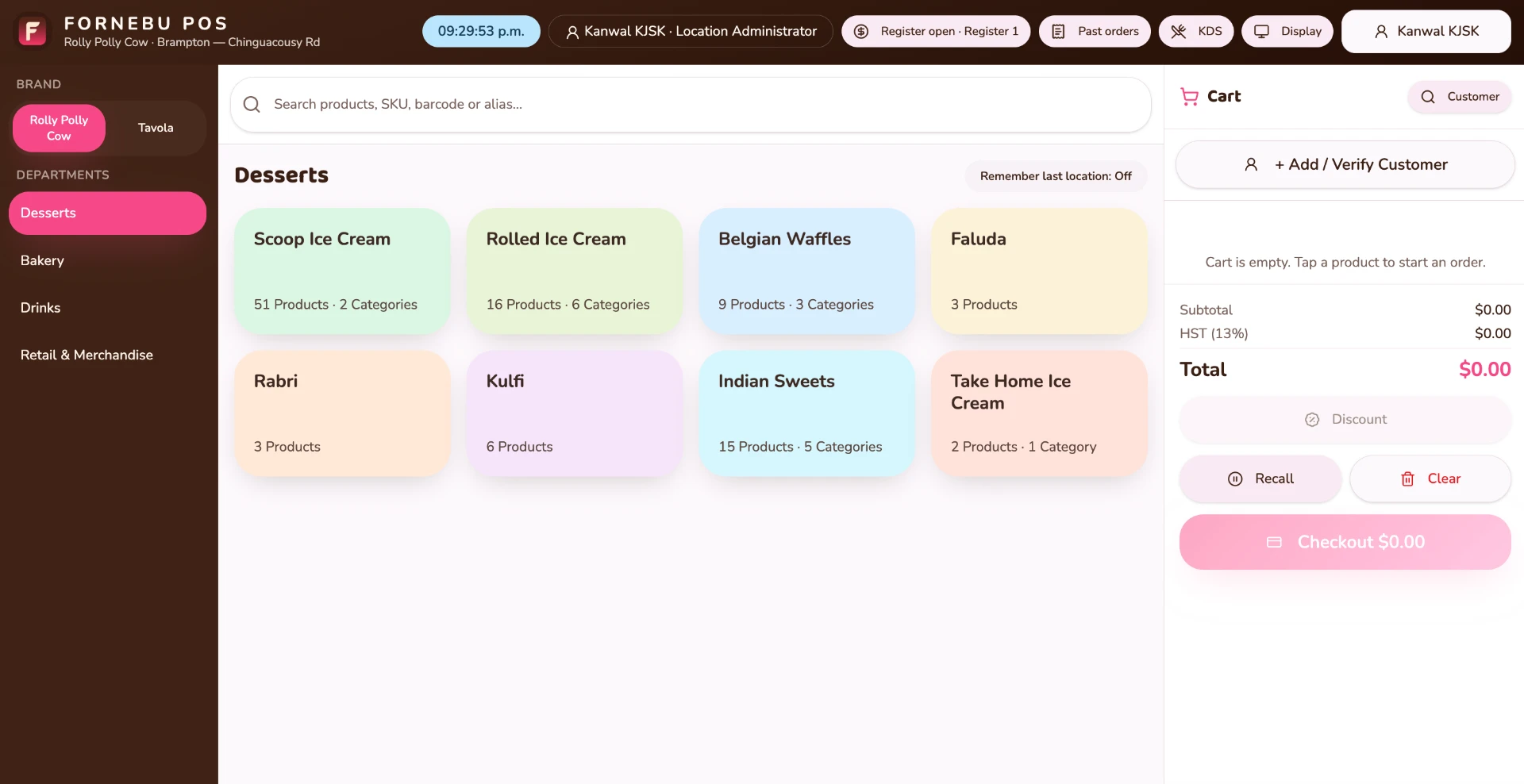
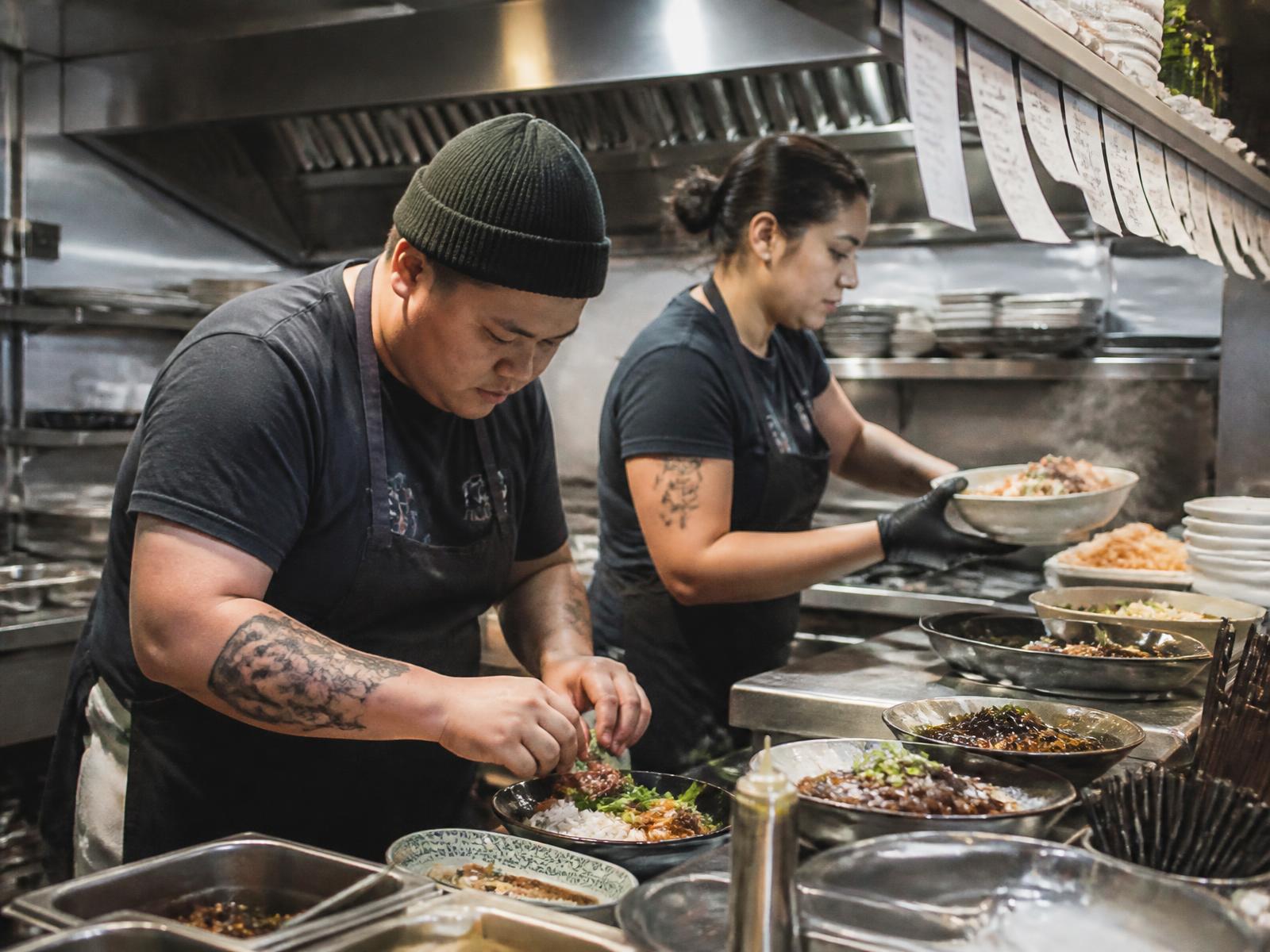
From the counter to the kitchen to the people running the shift.
FORNEBU follows the restaurant day — taking the order, getting it made, understanding what was used, recognizing the customer, organizing the team and helping management see what actually happened.
FORNEBU Intelligence
Your restaurant already has the answers. FORNEBU connects them.
Sales, orders, products, customers, labour and locations create operational information every day. FORNEBU Intelligence connects that information so restaurant operators can better understand what is happening and what the operation may need next.
- 01Restaurant History
- 02Expected Demand
- 03Required Coverage
- 04Workforce
- 05Smart Schedule
- 06Actual Hours
The people who run the restaurant should be connected too.
From scheduling the shift to running it.
FORNEBU connects availability, skills, intelligent scheduling, time tracking, team communication, operational duties and confidential feedback — so the people side of the restaurant doesn't require a collection of disconnected apps.
- 01Availability
- 02Skills & Qualifications
- 03Smart Scheduling
- 04Time Clock
- 05Team Communication
- 06Tasks & Duties
- 07360° Feedback
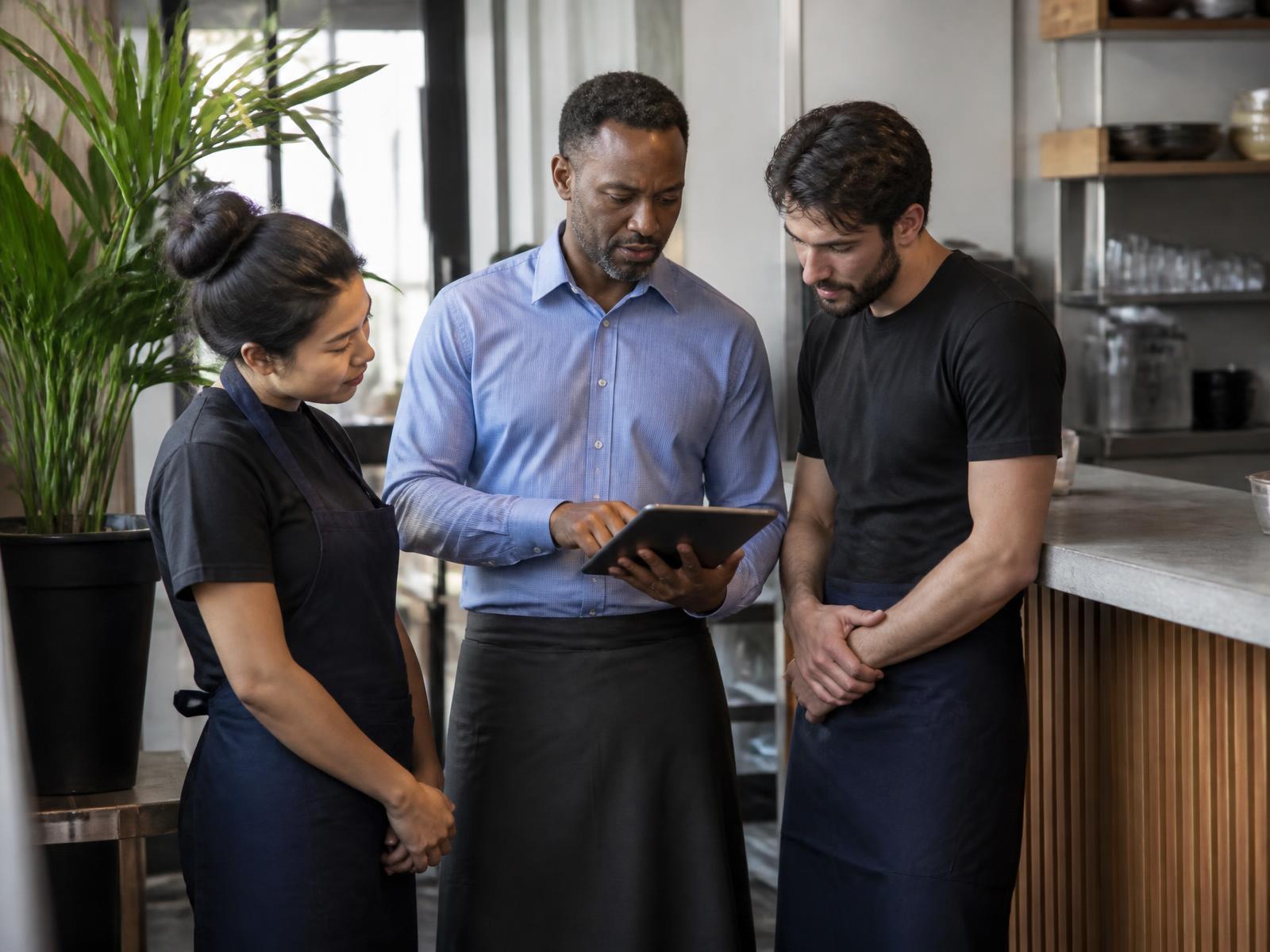
Smart scheduling & demand intelligence
Staff for the business you’re expecting.
Not just the week you’re filling.
FORNEBU reads your own restaurant demand in 30-minute intervals and combines it with employee availability, skills, proficiency, operating hours and labour requirements to produce a scheduling recommendation — which a manager always reviews before it becomes the schedule.
Restaurant demand
Actual sales history read in 30-minute intervals.
Required coverage
Labour requirements per interval, per station.
Availability + skills
Who can work, and who is proficient at the role.
Recommended schedule
A draft the manager reviews, edits and approves.
Recommendations are built from your restaurant’s own operating data — actual POS demand in 30-minute intervals, employee availability, skills and proficiency, operating hours and labour requirements — then reviewed by a manager before becoming the schedule.
FORNEBU Marketplace
Delivery orders. One restaurant operation.
Bring marketplace orders into the same operating flow as your restaurant — from order intake to kitchen production, inventory and reporting.
- 01Marketplace Order
- 02Restaurant Intake
- 03Kitchen Production
- 04Inventory
- 05Reporting
One order flow
Delivery orders are intended to enter the same operational flow as counter orders rather than living in a separate tablet beside the till.
Kitchen production
Marketplace items are intended to reach the same preparation stations and production workflow the kitchen already uses.
Inventory and reporting
Because the order is part of the operation, what is sold through delivery is intended to be reflected in inventory movement and reporting.
Centralized menu control
Marketplace menus are intended to be managed from the same product and menu structure the restaurant already maintains.
Channel-specific pricing
Keep your restaurant's in-store pricing intact while managing marketplace-specific pricing independently.
- In-store pricing stays exactly as the restaurant sets it
- Marketplace pricing is managed separately from counter pricing
- Pricing decisions stay part of centralized menu and catalogue control
- Each location keeps its authorized products and availability
Marketplace connectivity is being developed and validated. We don't describe any specific delivery marketplace as live or certified until it genuinely is.
Marketplace
Reserved for a production FORNEBU screenshot.
Delivery channels join the same operating flow
Multi-location · restaurant groups · franchise systems
Central control. Local flexibility.
Restaurant groups can manage menu and catalogue structure centrally, while each location operates according to the products, pricing, availability and configuration it is authorized to run.
Corporate administration
Head office manages brand and product structure, recipes, menus and which products each location is authorized to sell.
Shared catalogue, local menu
Define a product once centrally, then let each store sell only what it actually offers, at its authorized price.
Local operation
Employees, shifts, cash handling, printing and stock stay with the store, even under one head office.
More than one brand
FORNEBU is designed as a platform layer above the restaurant brand, so a second concept can run alongside the first rather than replacing it.
Managed centrally
- Brand and product structure
- Recipes and ingredients
- Menu and catalogue definitions
- Which products each location is authorized to sell
- Operating standards and reporting structure
Operated locally
- What the store actually sells day to day
- Local pricing and availability where authorized
- Store team, schedules and worked hours
- Cash handling and the store's business day
- Store-level operational configuration
Built for multi-location restaurant operators, restaurant groups, franchise systems.
Product family
One system. Ten operating modules.
Each module handles a different part of the restaurant day — and reads from the same records as the rest. New capabilities such as Marketplace strengthen these ten modules rather than becoming another system to run.
- FORNEBU POSSee the platform →
- FORNEBU KitchenSee the platform →
- FORNEBU InventorySee the platform →
- FORNEBU LoyaltySee the platform →
- FORNEBU WorkforceExplore →
- FORNEBU Smart ScheduleExplore →
- FORNEBU TimeSee the platform →
- FORNEBU TeamSee the platform →
- FORNEBU IntelligenceExplore →
- FORNEBU ControlSee the platform →

Built by restaurant operators
Built in restaurants,
not around assumptions.
FORNEBU grew from operating real restaurants and confronting the systems, decisions and daily work required to keep them running.
Where it is being built
- Rolly Polly Cow
- Pizza Tavola
At the counter
Fast, touch-first flows that hold up during a rush.
For the manager
Stock, staffing and service visible in one place.
For the owner
Location performance without assembling reports by hand.
Why FORNEBU
Why operators choose one system.
01
One connected operating system
POS, kitchen, inventory, customers, workforce and reporting share one data model instead of one integration per problem.
02
Built around restaurant workflows
Modifiers, prep stations, recipes, shifts and multi-location control are first-class, not workarounds.
03
Real-time operational visibility
What happens at the counter is visible in the kitchen, the stockroom and the back office as it happens.
04
Designed to scale from one to many
The same platform runs a single room and a growing group of locations and brands.
FORNEBU
Not another tool for the restaurant.
The operating system for it.
Sell. Serve. Stock. Grow. Team. Control. Connected by one restaurant operating system.