One platform, every operating surface.
FORNEBU is organized around six operating pillars. Each covers a different part of the restaurant day — all connected through one operating system.
The FORNEBU platform
One operating system. Specialized tools for every part of the restaurant.
FORNEBU connects the systems that run the restaurant while giving each part of the operation the tools it needs. From the counter and kitchen to inventory, customers, workforce and management, everything works from the same connected operational foundation.
FORNEBU POS
Ordering, customers, modifiers, payments and restaurant transactions in one fast counter workflow.
In the operationFORNEBU Kitchen
Kitchen display, preparation routing and order execution so every item reaches the station that makes it.
In the operationFORNEBU Inventory
Receiving, inventory counts, recipes, ingredients and stock movement tied to what the restaurant actually sold.
In the operationFORNEBU Loyalty
Customer profiles, visits, rewards and retention built from real purchases at the counter.
In the operationFORNEBU Workforce
Employees, skills, proficiency, availability and multi-location workforce management in one place.
ExploreFORNEBU Smart Schedule
Demand-driven restaurant scheduling built around expected workload, employee availability and operational capability.
ExploreFORNEBU Time
Clock-in/out, breaks, timesheets, actual work location and accountable labour hours.
In the operationFORNEBU Team
Team communication, tasks and duties and confidential 360° feedback, attached to the store, schedule and shift.
In the operationFORNEBU Intelligence
Demand intelligence, operational reporting and decision support drawn from the restaurant's own history.
ExploreFORNEBU Control
Multi-location and multi-brand administration, permissions, operational controls, auditability and business oversight.
In the operationFrom order to payment, in one flow.
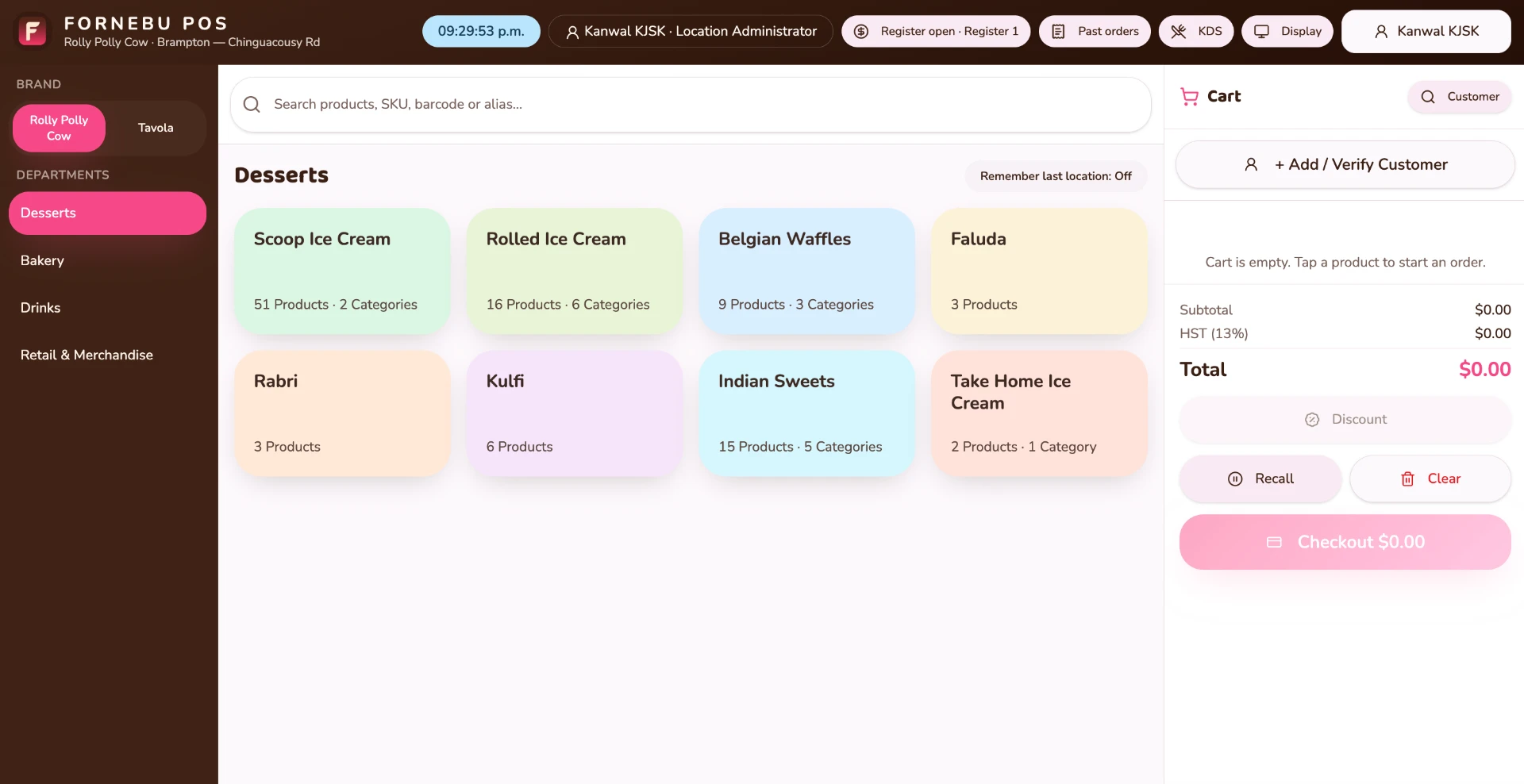
Everything the counter needs is on one screen: the menu, the modifiers, the customer, the reward and the payment. The order is built once, and the rest of the restaurant reads it from there.
Ordering
- Touch-first restaurant POS
- Product and menu hierarchy
- Departments, categories and subcategories
- Modifiers
- Substitutions and replacements with applicable upcharges
- Multi-brand ordering from one till
The customer at the counter
- Customer identification
- Loyalty and reward redemption
- Discounts
- Customer-facing display
Closing the sale
- Payment terminal integration architecture
- Receipts
- Refunds
- Past orders
- Kitchen routing straight from the order
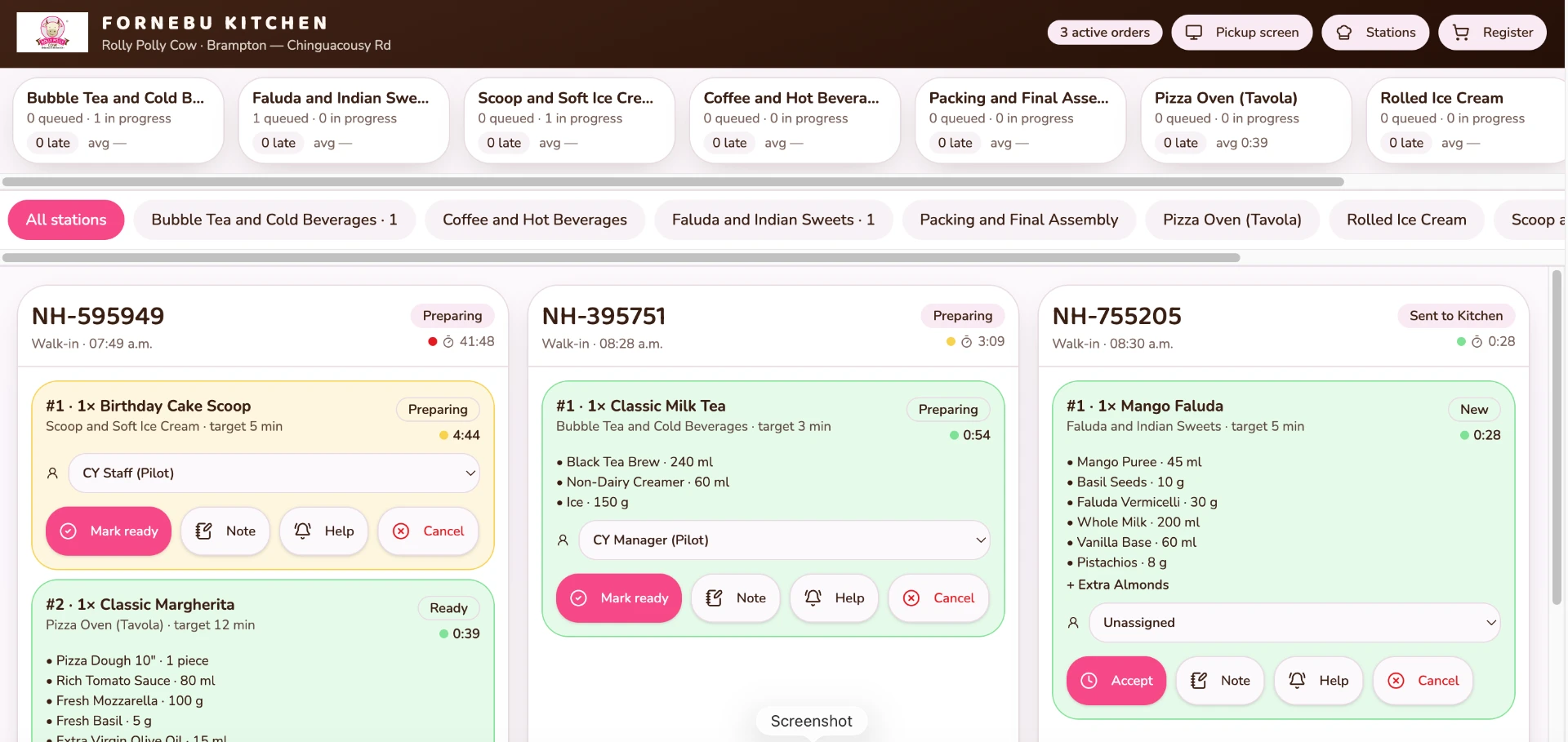
The moment the sale is confirmed, the kitchen already has the work.
The kitchen sees exactly what was sold.
Items land at the station that makes them, with the modifiers and instructions attached. The line works item by item, and the order is only ready when every item is.
Routing
- Kitchen Display System
- Kitchen stations
- Automatic station routing
- Mixed-brand kitchen routing
Production
- Item-level preparation workflow
- Modifiers and instructions reaching production
- Order status workflow
What the kitchen makes is what inventory counts against.
Know what you have and what you used.
Products, recipes and ingredients are held once, so what you sell explains what you consumed. Receiving, counts and purchasing then work from real movement instead of guesswork.
Master data
- Product Master
- Recipes
- Ingredients
Stock on hand
- Receiving
- Inventory counts
- Inventory movement and variance
Replenishment
- Purchasing
- Consumption tied to products, recipes and ingredients
The same order that moves stock also builds the customer relationship.
Turn transactions into relationships.
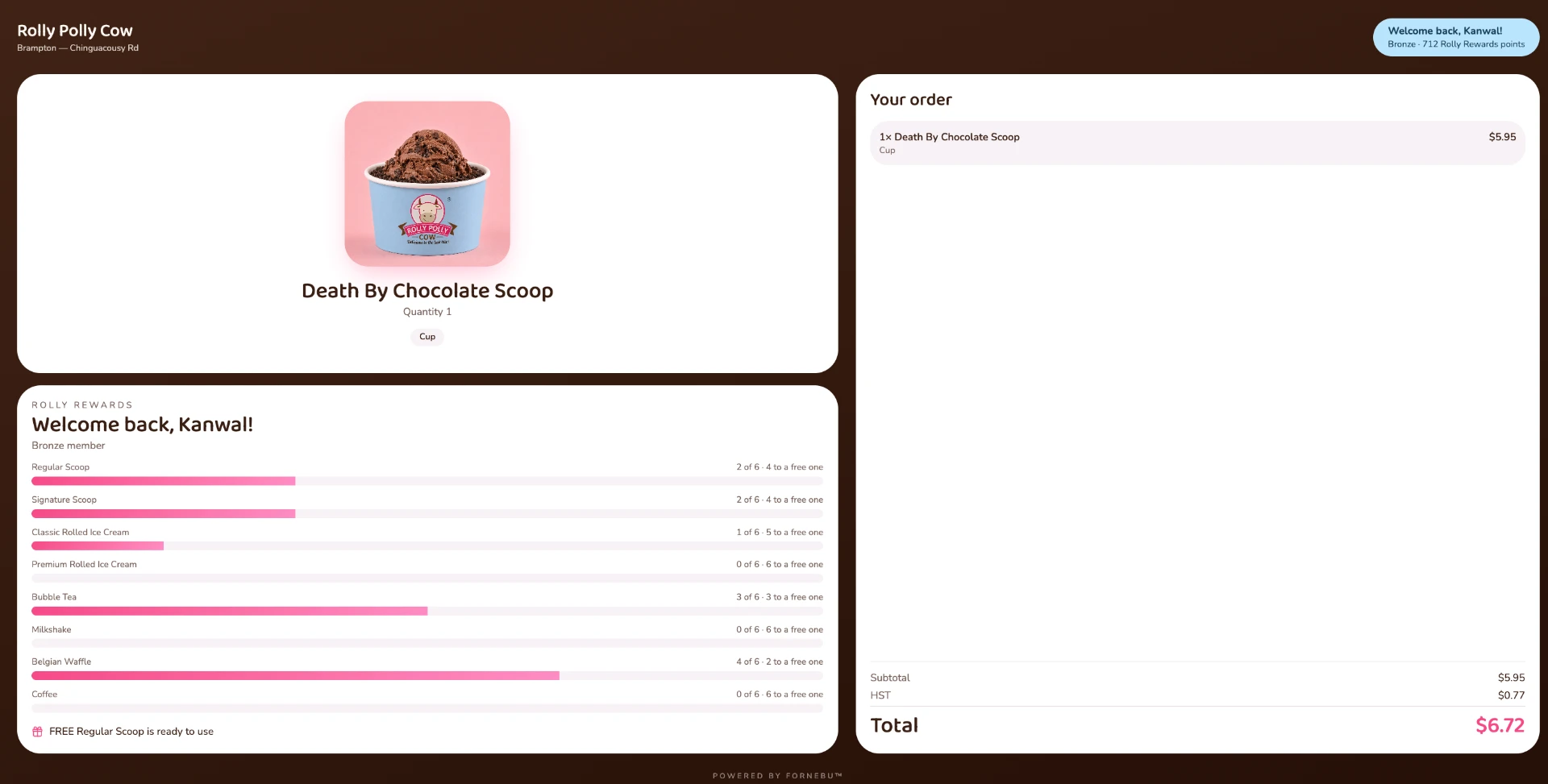
Customers are recognised at the counter, and their history builds itself from real purchases. Loyalty progress and rewards are visible to the guest while the order is being taken.
Who the customer is
- Customer profiles
- Customer identification at POS
- Purchase and customer history
Loyalty
- Loyalty programs
- Loyalty progress
- Rewards and redemption
- Birthday and member rewards where supported
- Brand-specific loyalty
Offers
- Promotions where currently supported
Serving guests well depends on having the right people on the floor.
Run the people side of the restaurant.
One employee record carries stores, roles, skills and availability. Smart Scheduling reads your own POS demand in 30-minute intervals to recommend coverage, the shared time clock turns those shifts into approved payroll hours, and communication, duties and structured feedback stay attached to the same team. The full story lives on the Workforce page.
Employee record
- Employee profiles
- Home and authorized stores
- Roles
- Skills and proficiency
- Recurring availability
- Week-specific availability
Smart Schedule & Time Clock
- Demand Intelligence from actual POS demand in 30-minute intervals
- Required labour coverage
- Availability, skills and proficiency matching
- Manager-reviewed schedule recommendations
- Shared PIN Time Clock, breaks and timesheets
- Scheduled vs actual, exceptions and manager approvals
- Actual Store Worked and payroll attribution
Communication, Tasks & Duties, 360° Feedback
- Announcements, groups and direct messages
- Opening, during-shift and closing checklists
- Recurring responsibilities and weekly rotation
- Manager verification and completion notes
- Confidential multi-reviewer 360° feedback
- Anonymized aggregate results with owner-controlled access
Every shift, sale and count rolls up into what the owner sees.
See and control the business.
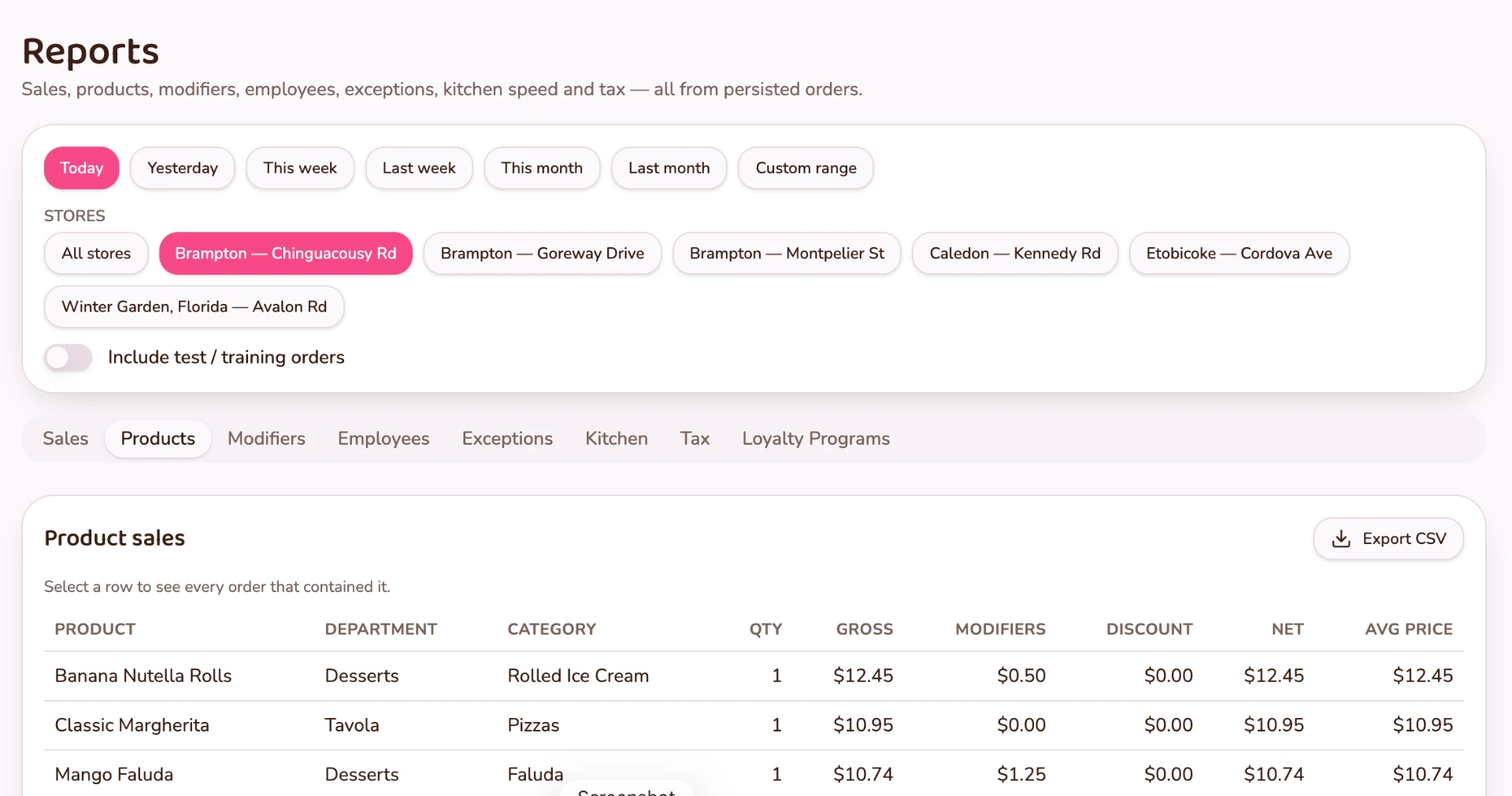
Close the day with confidence and read the business across locations and brands. Sales, cash, access and operational changes stay visible, controlled and accountable.
Reporting
- Reporting
- Scheduled reports
- Email report delivery
Locations and brands
- Multi-location management
- Multi-brand management
- Location-specific menu and product availability
- Store-scoped employee access
Cash and the business day
- Register sessions
- Cash management
- Opening floats
- Blind cash counts
- Variance tracking
- Business Day Close
Governance
- Permissions and access controls
- Store Network Access Controls
- Audit history
Connected capability · FORNEBU Marketplace
Delivery orders. One restaurant operation.
Bring marketplace orders into the same operating flow as your restaurant — from order intake to kitchen production, inventory and reporting.
Marketplace is a connected capability across the existing pillars rather than an eleventh operating module. A delivery order is intended to arrive as restaurant work: the same product structure, the same kitchen production, the same inventory movement and the same reporting.
- 01Marketplace Order
- 02Restaurant Intake
- 03Kitchen Production
- 04Inventory
- 05Reporting
One order flow
Delivery orders are intended to enter the same operational flow as counter orders rather than living in a separate tablet beside the till.
Kitchen production
Marketplace items are intended to reach the same preparation stations and production workflow the kitchen already uses.
Inventory and reporting
Because the order is part of the operation, what is sold through delivery is intended to be reflected in inventory movement and reporting.
Centralized menu control
Marketplace menus are intended to be managed from the same product and menu structure the restaurant already maintains.
Channel-specific pricing
Keep your restaurant's in-store pricing intact while managing marketplace-specific pricing independently.
- In-store pricing stays exactly as the restaurant sets it
- Marketplace pricing is managed separately from counter pricing
- Pricing decisions stay part of centralized menu and catalogue control
- Each location keeps its authorized products and availability
Marketplace
Reserved for a production FORNEBU screenshot.
See the pillars working together.
See how Sell, Serve, Stock, Grow, Team and Control come together in one restaurant operating system.