Built around what actually happens in a restaurant.
Restaurants don't operate in feature lists. A team member calls in sick. Inventory doesn't match. Someone forgets a closing duty. A rush arrives unexpectedly. A regular customer earns a reward.
FORNEBU connects the systems behind those moments.
Situation → How FORNEBU helps → Outcome
Situations restaurant operators recognize.
Each scenario starts with the question an operator actually asks on shift — not the name of a software module.
How many people should I schedule tomorrow?
Situation
Managers often build schedules from habit, intuition or last week's staffing rather than actual expected demand.
How FORNEBU helps
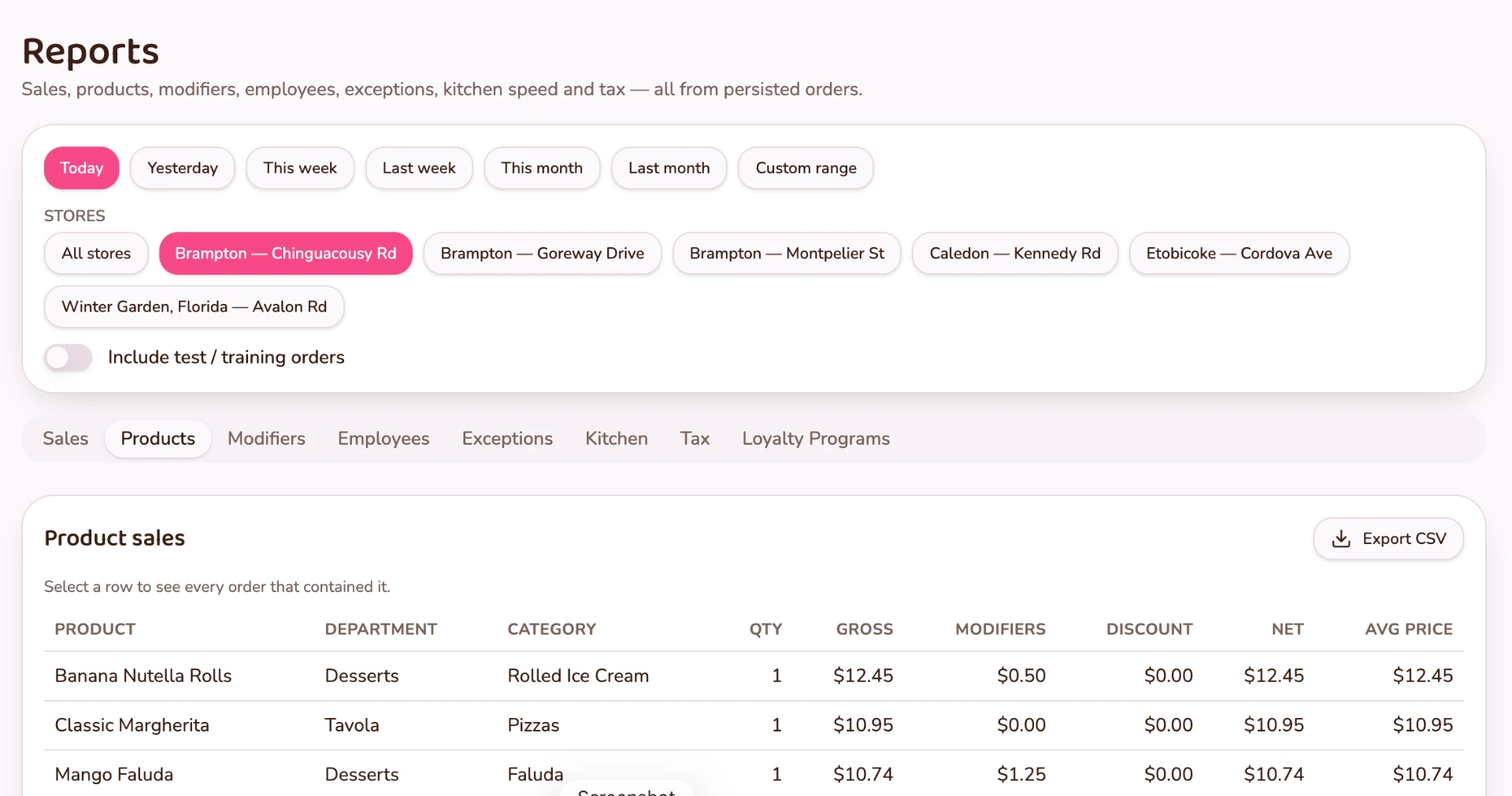
Demand Intelligence analyzes restaurant operating history and produces time-based demand forecasts. Smart Scheduling can use demand together with employee availability, skills, qualifications, store authorization and scheduling constraints to help managers create a draft schedule.
Outcome
Build the schedule around the restaurant you expect to operate — not simply the one you operated last week.
My opening employee called in sick. What happens to the work?
Situation
Changing the shift doesn't make opening responsibilities disappear.
How FORNEBU helps
The published schedule provides operational context for Tasks & Duties. Opening responsibilities can be reassigned by a manager to employees actually scheduled to work, rather than remaining attached to someone who isn't there.
Outcome
The shift can change without the responsibilities disappearing.
Who is responsible for the washroom this week?
Situation
Recurring duties can become everyone's responsibility — which often means nobody clearly owns them.
How FORNEBU helps
Tasks & Duties supports weekly responsibility ownership, fair rotation among eligible employees, daily maintenance duties and a weekly deep-clean task. The weekly deep clean is placed on an actual scheduled shift for the responsibility owner rather than an off-shift day. Manager verification can be required.
Outcome
Clear ownership without creating impossible assignments.
Did the closing team actually finish everything?
Situation
A locked door doesn't necessarily mean every closing responsibility was completed.
How FORNEBU helps
Closing checklists can define the work required, assign responsibility, record completion and require manager verification where configured.
Outcome
Turn closing routines from assumptions into visible operational accountability.
How do I communicate with the team without sharing everyone's phone number?
Situation
Restaurant communication often spills into personal messaging apps and exposes personal contact details.
How FORNEBU helps
Team Communication provides announcements, groups and direct messages inside the workforce environment, without exposing employees' personal contact information through the employee directory.
Outcome
Keep restaurant communication connected to the workplace.
How is this supervisor actually working with the team?
Situation
Hours worked don't tell an owner everything about communication, teamwork, reliability, customer service, operational knowledge or leadership.
How FORNEBU helps
360° Feedback supports structured confidential feedback from multiple reviewers, supporting comments, supervisor-specific questions where appropriate and protected aggregate reporting. Reviewer confidentiality and owner-controlled access are core parts of the system.
Outcome
Understand the working relationship behind the timesheet.
Why doesn't my inventory match what I expected?
Situation
Restaurants purchase ingredients, consume them through recipes, receive deliveries, perform counts and experience operational variance. Looking only at purchases doesn't explain the whole picture.
How FORNEBU helps
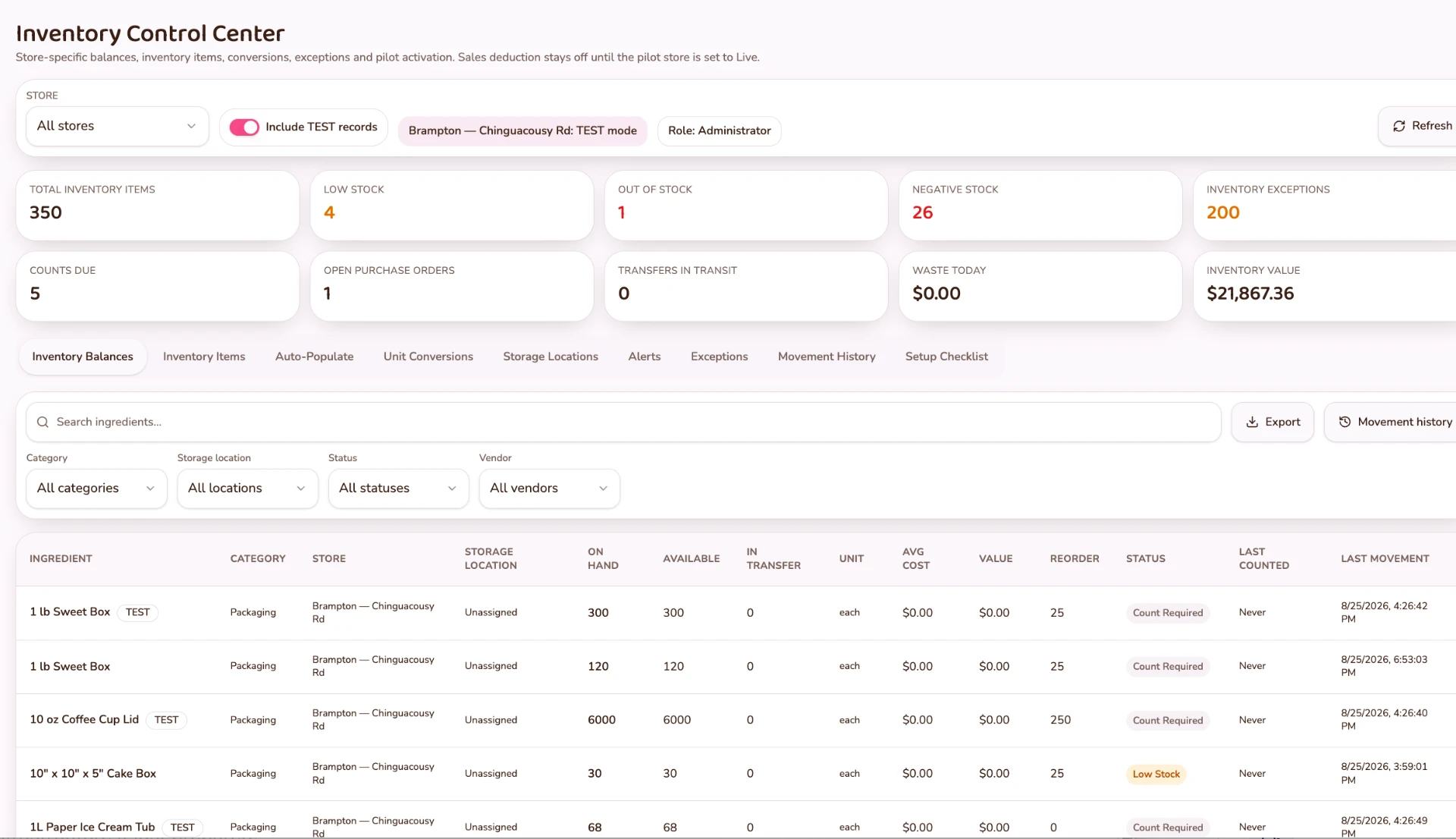
FORNEBU connects recipes, inventory items, receiving, physical counts and restaurant sales context so operators can investigate expected versus actual inventory movement.
Outcome
Move from simply counting inventory toward understanding why it changed.
An employee works at more than one location.
Situation
An employee may belong primarily to one restaurant while occasionally working at another.
How FORNEBU helps
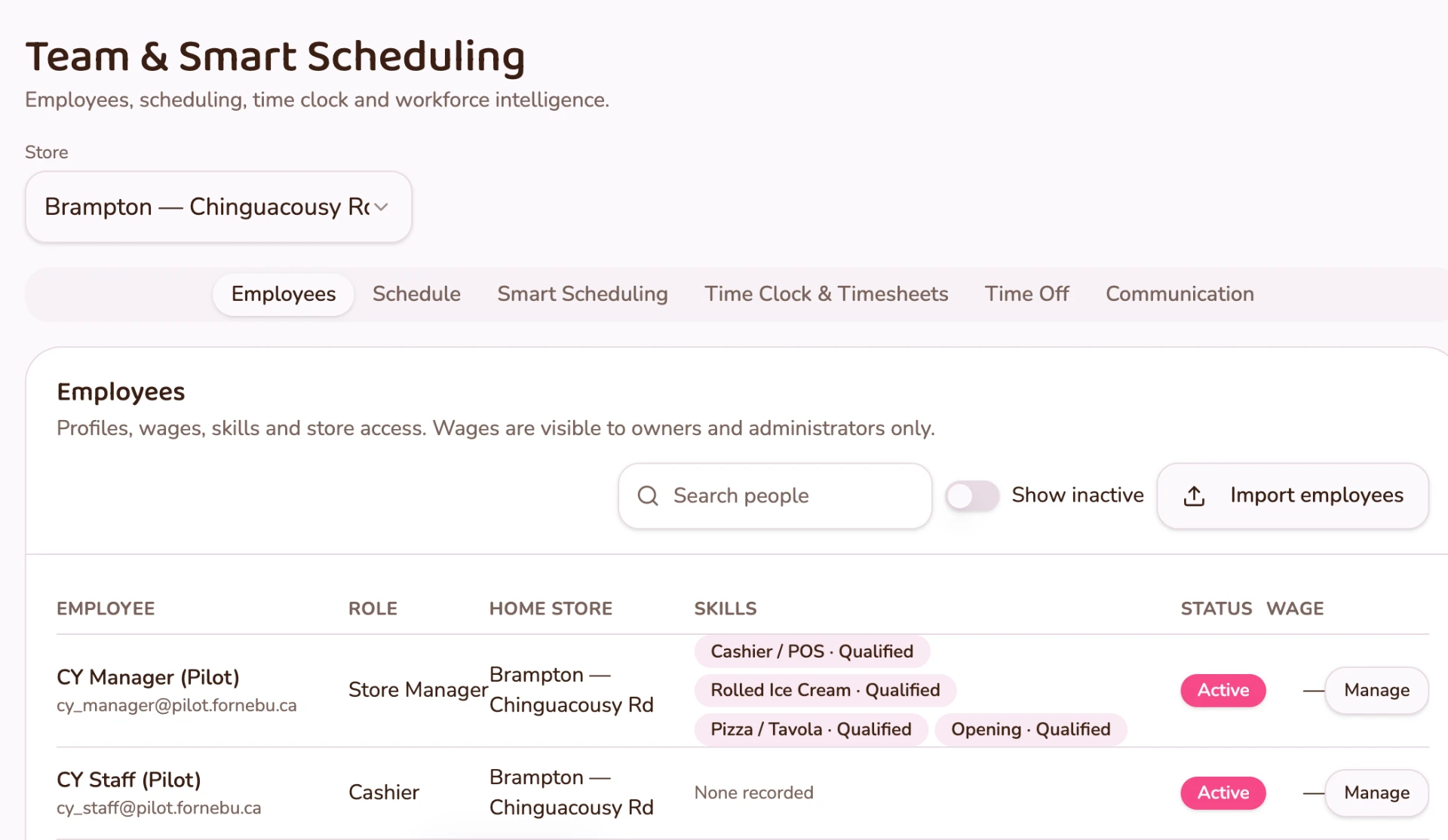
FORNEBU separates Home Store from authorized additional stores and records the actual work location for time entries. Scheduling and workforce rules can respect where the employee is authorized to work.
Outcome
One employee record. Multiple authorized locations. Clear operational context.
My locations don't all sell the same things.
Situation
Multi-location restaurant groups often share brands and products while individual stores have different operating models and menus.
How FORNEBU helps
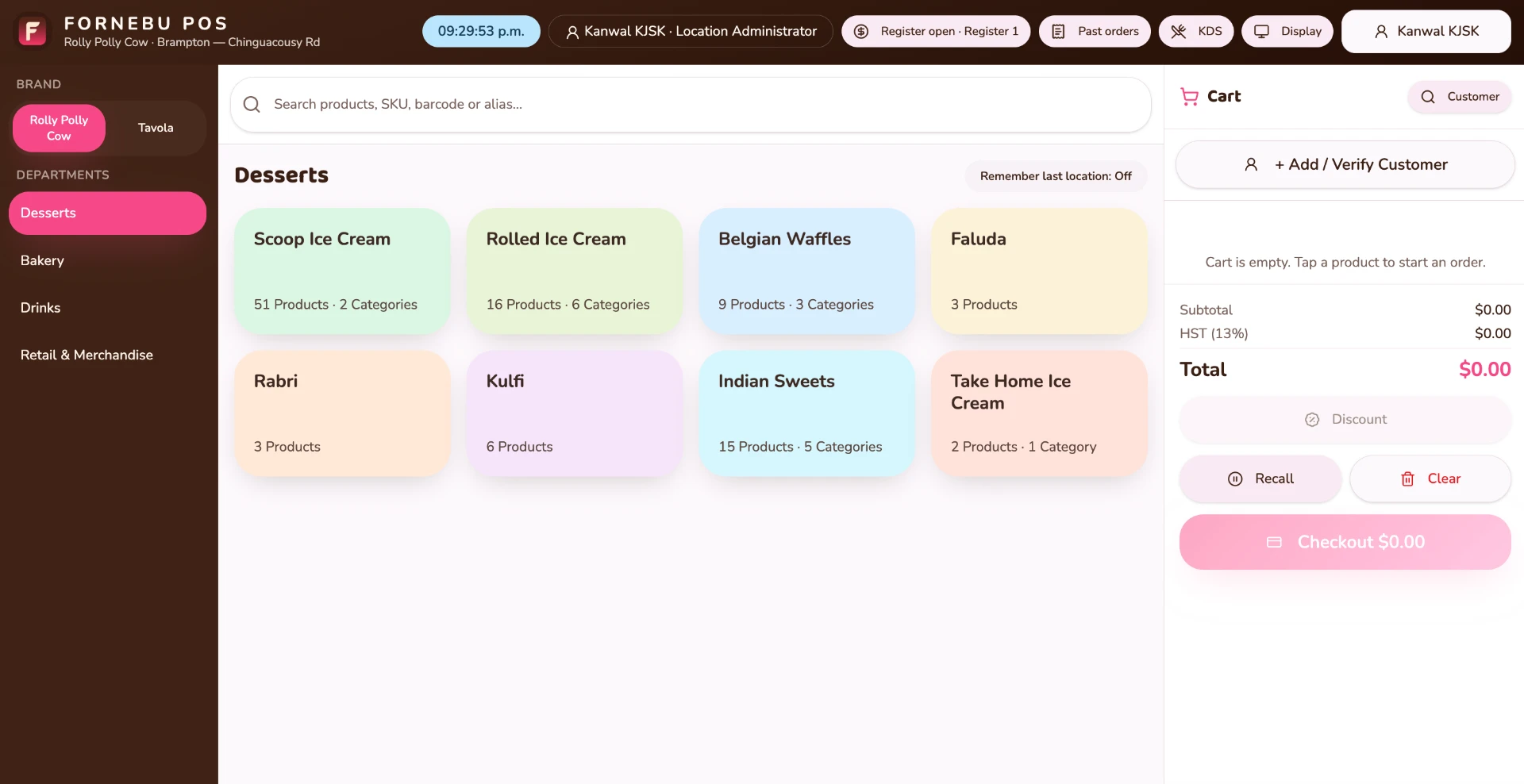
FORNEBU supports store-level menu and brand availability so operators can control what is sellable at each location while retaining a connected operating structure.
Outcome
Central control without forcing every restaurant to operate identically.
A customer has earned their next reward.
Situation
Loyalty shouldn't depend on a cashier remembering how many times someone has visited.
How FORNEBU helps
FORNEBU can maintain customer identity and qualifying reward progress so configured loyalty programs can recognize when a customer reaches the required milestone.
Outcome
Make recognition part of the transaction rather than the cashier's memory.
Delivery orders live in a separate tablet beside my till.
Situation
Marketplace orders often arrive on their own device, with their own menu and their own numbers, so the kitchen and the reporting never see one operation.
How FORNEBU helps
FORNEBU Marketplace is in development as a connected capability, intended to bring delivery orders into the same order flow, kitchen production, inventory movement and reporting the restaurant already uses, with marketplace pricing managed separately from in-store pricing. No delivery marketplace is live or certified yet.
Outcome
One operation for the restaurant, however the order arrives.
Your restaurant has its own operating challenges.
See how FORNEBU can bring the systems behind them together.